In family court proceedings, parties are generally expected to cooperate with the process by answering questions truthfully and providing relevant information.

Can You Refuse to Answer Questions in Family Court? Legal Position Explained

In family court proceedings, parties are generally expected to cooperate with the process by answering questions truthfully and providing relevant information. The purpose of such questioning is to help the court understand the facts of the case and arrive at a fair decision. Therefore, as a general rule, a person cannot simply refuse to answer […]
Continue Reading
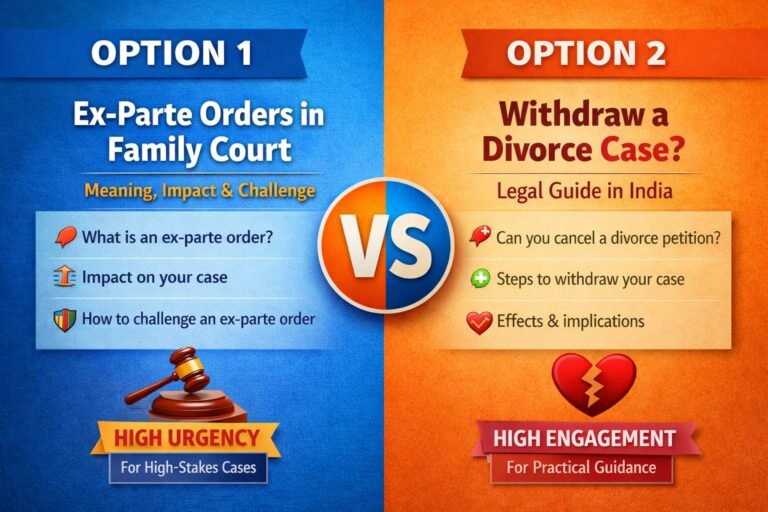
Comparison infographic showing Ex-Parte Orders in Family Court vs Withdrawing a Divorce Case in India with key legal points, symbols of justice, and highlighted urgency vs engagement themes

What Evidence is NOT Accepted in Family Court? (India Guide)

In family court matters such as divorce, maintenance, or child custody, evidence plays a crucial role. However, many people assume that anything can be submitted as proof. That is not correct. Courts follow specific legal principles to determine whether evidence is admissible. Submitting improper or inadmissible evidence can weaken your case, even if your claims […]
Continue Reading