
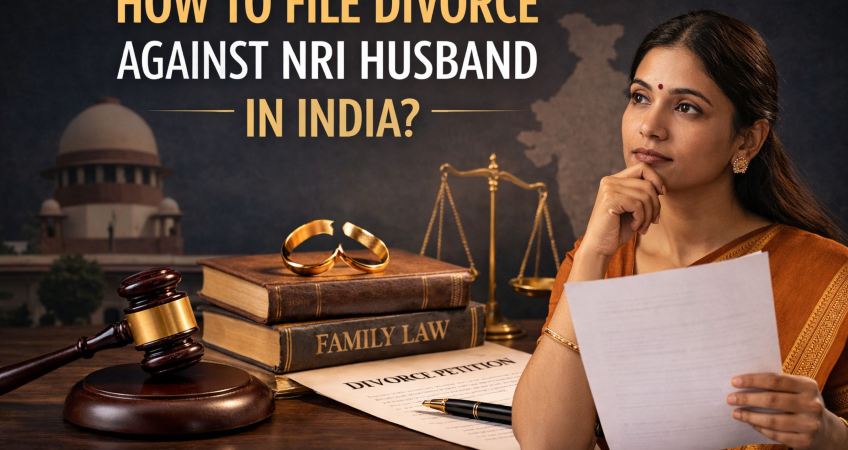
Woman reviewing legal document with gavel, law books, and text “How to File Divorce Against NRI Husband in India

How to File Divorce Against NRI Husband in India?

Filing for divorce against an NRI (Non-Resident Indian) husband can involve additional legal complexities due to cross-border jurisdiction and differences in legal systems. Under Indian family law, such cases are handled with specific attention to jurisdiction, service of notice, and enforcement of court orders. This guide explains the process, legal grounds, and important considerations when […]

Continue Reading
Infographic explaining digital evidence in divorce cases, including WhatsApp chats, emails, and call recordings, with legal symbols like a judge’s gavel, smartphone messages, and email communication.

Digital Evidence in Divorce: Understanding WhatsApp Chats, Emails, and Call Recordings

The digital age has transformed the way people communicate. Conversations that once happened through letters or face-to-face interactions now take place through instant messaging apps, emails, and phone calls. In matrimonial disputes and divorce proceedings, these digital communications can sometimes become important in understanding the circumstances of a case. Messages, emails, and voice recordings often […]
Continue Reading
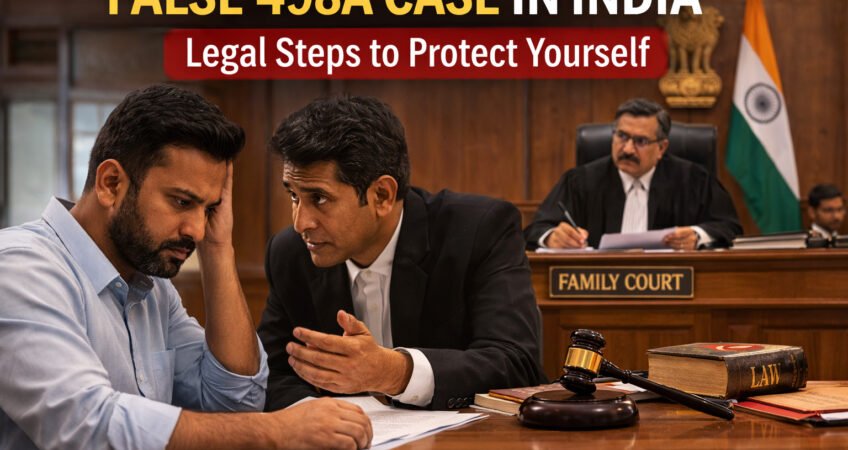
Lawyer advising a man in an Indian family court regarding legal protection in a false Section 498A case related to matrimonial disputes.

False 498A Case in India: Legal Steps to Protect Yourself

Section 498A of the Indian Penal Code (IPC) was enacted to protect married women from cruelty and harassment by their husbands or their relatives, particularly in cases involving dowry demands. The provision was introduced to address the serious issue of domestic violence and dowry-related abuse within marriage. With the introduction of the Bharatiya Nyaya Sanhita, […]

Continue Reading
How To Win Child Custody

How To Win Child Custody

Child custody is a significant problem that comes up in matrimonial cases, especially when a couple is divorcing or separating. Legal and physical custody of a kid or children born to the couple is referring to as child custody. Legal custody is the authority to make choices regarding the child’s safety, upbringing, medical care, and […]

Continue Reading
Procedure Of Divorce in India - Best divorce lawyer in Delhi

Procedure Of Divorce in India

Best Divorce Lawyer in Delhi Divorce is the formal dissolution of a marriage accomplished by submitting a petition to a court of law. When a court issues a divorce judgment, it dissolves the couple’s matrimonial union and ends the marriage as a whole. Along with the divorce of the husband and wife, other issues related […]

Continue Reading
Mutual Divorce lawyers in Delhi with Low Fees

A Complete Procedure of Mutual Consent Divorce in India

Mutual Divorce lawyers in Delhi Generally, divorce procedure involves emotionally and deal the ending process of a marriage between couples with the legal support of the court. Usually, divorce is a complex procedure that involves a court of law, and it can be initiated by either spouse or by mutual agreement. There are different categories […]
Continue Reading
Matrimonial Cases Transfer Petition in Supreme Court

Matrimonial Cases Transfer from One State to Another

Transfer Petition in Supreme Court There may be situations where it is necessary to transfer a legal case that has been filed in one state of India to another state. This can occur for a variety of reasons, including the convenience of the parties or witnesses, jurisdictional concerns, or other factors. In such circumstances, a […]

Continue Reading
Procedure of NRI divorce in India

Procedure of NRI divorce in India

In recent time, NRI marriages are growing day by day in the Indian people. As we know, millions of Indians are living as NRI in different country away from India. NRI is commonly known as non-resident Indian, it means those people who are Indian by birth but living abroad for their personal or public purposes. […]
Continue Reading
Transfer Petition in Supreme Court - Vintage Litigation

Transfer Petition in Supreme Court

Transfer Petition in Supreme Court Divorce is unconditional issues that create in between husband and wife. While sometime they need transfer of cases through petition due to the long distance of court for proceeding. You can involve in the process of the transfer petition, it isa legal remedy to request the transfer of their case […]

Continue Reading
Best Divorce Lawyer in Delhi - Vintage Litigation

Give A Brief About Divorce Under Hindu Marriage Act

Marriage is the best part of people life. It is a bond between two people who agree to spend the journey of life together. Marriage involves love but sometimes it becomes difficult for the couple and husband or wife to continue their marriage journey while it takes the shape of divorce in various forms like […]
Continue Reading

Filing for divorce against an NRI (Non-Resident Indian) husband can involve additional legal complexities due to cross-border jurisdiction and differences in legal systems. Under Indian family law, such cases are handled with specific attention to jurisdiction, service of notice, and enforcement of court orders.

This guide explains the process, legal grounds, and important considerations when filing for divorce against an NRI husband.

What is an NRI Divorce Case?

An NRI divorce case arises when one spouse resides outside India while the other is in India. These cases may involve:

  • Marriage solemnized in India or abroad
  • Spouse living in a foreign country
  • Legal proceedings initiated in India or overseas

Understanding jurisdiction becomes crucial in such cases.

Can You File Divorce Against an NRI Husband in India?

Yes, a wife can file for divorce against her NRI husband in India if certain conditions are met. Indian courts generally have jurisdiction if:

  • The marriage was solemnized in India
  • The couple last resided together in India
  • The wife is currently residing in India

Courts in Delhi and other jurisdictions can entertain such petitions based on these factors.

Can You File Divorce Against an NRI Husband in India?

Yes, a wife can file for divorce against her NRI husband in India if certain conditions are met. Indian courts generally have jurisdiction if:

  • The marriage was solemnized in India
  • The couple last resided together in India
  • The wife is currently residing in India

Courts in Delhi and other jurisdictions can entertain such petitions based on these factors.

Applicable Laws for NRI Divorce

Depending on religion and type of marriage, the following laws may apply:

  • Hindu Marriage Act, 1955
  • Special Marriage Act, 1954
  • Indian Divorce Act, 1869

These laws allow filing of both mutual and contested divorce.

Grounds for Filing Divorce Against an NRI Husband

A divorce petition must be based on valid legal grounds, such as:

  • Cruelty (mental or physical harassment)
  • Desertion (abandonment without reasonable cause)
  • Adultery
  • Domestic violence
  • Dowry harassment
  • Non-cohabitation for a long period

Each claim must be supported with proper evidence.

Step-by-Step Process to File Divorce Against NRI Husband

  1. Consult and Prepare the Petition

A detailed divorce petition is drafted mentioning facts, grounds, and relief sought.

  1. Filing in Family Court

The petition is filed in the appropriate family court having jurisdiction.

  1. Issuance of Notice to NRI Husband

The court sends a legal notice to the husband residing abroad through:

  • Registered post
  • Courier
  • Email (in some cases)
  • Indian Embassy/Consulate
  1. Service of Summons Abroad

Serving notice internationally may take time. Courts ensure proper delivery before proceeding.

  1. Response by Husband

The husband may:

  • Appear and contest the case
  • Respond through a lawyer
  • Ignore the notice
  1. Ex-Parte Proceedings (If No Response)

If the husband fails to appear despite proper notice, the court may proceed ex-parte (in his absence).

  1. Evidence and Hearings

The petitioner presents evidence, witnesses, and documents supporting the case.

  1. Final Judgment

The court grants divorce if the grounds are proven.

What If the NRI Husband Files Divorce Abroad?

Sometimes, the NRI spouse may file for divorce in a foreign court. In such cases:

  • Indian courts may or may not recognize the foreign decree
  • Recognition depends on whether it complies with Indian legal principles
  • Ex-parte foreign judgments are often challenged in India

Important Legal Challenges in NRI Divorce Cases

  • Difficulty in serving notice abroad
  • Delays due to international procedures
  • Enforcement of maintenance or custody orders
  • Conflicting judgments between Indian and foreign courts

Rights of Wife in NRI Divorce Cases

A wife filing divorce against an NRI husband has the right to:

  • Maintenance and alimony
  • Child custody and support
  • Residence rights
  • Protection under domestic violence laws

Documents Required

  • Marriage certificate
  • Address proof of both parties
  • Evidence supporting grounds (messages, emails, etc.)
  • Passport details (if available)
  • Photographs and identity proof

How Long Does It Take?

NRI divorce cases may take longer than regular cases due to:

  • International communication delays
  • Legal formalities abroad
  • Non-cooperation of the other spouse

Conclusion

Filing for divorce against an NRI husband in India is legally possible but involves additional procedural steps due to international aspects. Understanding jurisdiction, legal grounds, and proper procedures is essential for navigating such cases effectively.


FAQs

  1. Can I file divorce in India if my husband lives abroad?

Yes, if jurisdictional conditions are met, Indian courts can handle the case.

  1. What if my NRI husband does not respond to court notice?

The court may proceed ex-parte and decide the case in his absence.

  1. Is foreign divorce valid in India?

It depends on whether it complies with Indian laws and principles of natural justice

Written by Adv. Karan Dua, practising in Delhi, focuses on matrimonial and family law matters.


The digital age has transformed the way people communicate. Conversations that once happened through letters or face-to-face interactions now take place through instant messaging apps, emails, and phone calls. In matrimonial disputes and divorce proceedings, these digital communications can sometimes become important in understanding the circumstances of a case.

Messages, emails, and voice recordings often leave a digital trail that can help establish timelines, clarify conversations, or provide context during legal discussions. However, the use of digital evidence in legal proceedings requires careful consideration of authenticity, privacy, and legal procedures.

The Growing Importance of Digital Communication

Today, most personal and professional conversations happen through digital platforms such as WhatsApp, Gmail, Microsoft Outlook, and social media applications like Facebook or Instagram.

These platforms allow individuals to exchange messages, voice notes, photographs, documents, and videos instantly. Because of this, they often store records of communication that may later become relevant when resolving personal disputes, including divorce.

Digital communication can help illustrate how conversations unfolded over time and may provide useful context when disagreements arise.

WhatsApp Messages and Chat History

Instant messaging platforms have become one of the most common ways people communicate with family members and partners. Applications such as WhatsApp allow users to exchange text messages, voice notes, photos, and documents.

In matrimonial disputes, chat histories may sometimes be examined to understand communication patterns between individuals. For example, messages might show discussions about financial matters, household responsibilities, or disagreements that occurred during the relationship.

However, screenshots or chat exports alone may not always be sufficient. In many situations, proper verification of the messages may be required to establish that they are genuine and have not been modified.

Emails as Documented Communication

Emails often serve as a formal record of conversations. Platforms like Gmail or Microsoft Outlook automatically store timestamps, sender information, and attachments, which can help establish a clear record of communication.

During divorce proceedings, emails may sometimes be referenced if they contain discussions about finances, living arrangements, responsibilities, or other relevant matters. Attachments such as financial documents, agreements, or shared plans may also be part of the communication trail.

Because emails are usually stored on servers and personal devices, they can sometimes provide a more structured and verifiable record compared to informal messages.

Call Recordings and Voice Notes

Phone calls and voice messages can also become part of digital communication records. Voice notes sent through messaging apps or recordings of conversations may sometimes be referenced during legal discussions if they relate to the dispute.

However, the admissibility of call recordings can depend on various factors, including the context in which the recording was made and whether it complies with applicable legal requirements. In some situations, the authenticity of the audio recording and the identity of the speakers may need to be verified.

For these reasons, individuals should approach the use of voice recordings carefully and seek proper legal advice before relying on them in legal matters.

Authenticity and Verification of Digital Evidence

One of the most important aspects of digital evidence is proving that the information presented is authentic. Digital records can be edited or manipulated, which is why courts often require verification before considering such material.

Several factors may be evaluated when reviewing digital evidence, including:

  • The device or platform where the communication originated
  • Date and time stamps associated with the message or file
  • Metadata that indicates how the file was created or stored
  • Supporting records that confirm the communication actually took place

Proper documentation and preservation of digital records can help ensure that the information remains reliable and credible.

Privacy and Ethical Considerations

While digital communication may sometimes help clarify facts during disputes, privacy concerns are also important. Accessing another person’s private account without permission or obtaining information through unauthorized means can raise legal and ethical issues.

It is important for individuals to respect privacy laws and maintain responsible conduct when dealing with personal digital data. Handling sensitive information carefully helps avoid additional complications during already stressful legal situations.

Managing Digital Communication During Divorce

Divorce proceedings can be emotionally challenging, and digital communication may sometimes intensify conflicts. Messages written during moments of anger or frustration may later be interpreted differently when reviewed in a legal context.

Maintaining respectful and thoughtful communication during such times can help reduce misunderstandings. It may also be helpful to limit discussions about legal matters on informal digital platforms and instead rely on proper legal channels when necessary.

Keeping records of important communications while avoiding unnecessary online disputes can contribute to a more constructive approach to resolving disagreements.

The Role of Digital Evidence in Modern Legal Disputes

As technology continues to evolve, digital communication will likely remain an important aspect of many legal discussions. Messages, emails, and audio recordings can sometimes help establish facts, clarify timelines, and provide insight into conversations between individuals.

However, the relevance and admissibility of digital evidence depend on several legal factors, including authenticity, context, and compliance with legal procedures. Each case is unique, and the way digital records are considered may vary depending on the specific circumstances.

Conclusion

Digital evidence has become increasingly relevant in modern matrimonial disputes. Platforms like WhatsApp, email services, and voice communication tools often store valuable records of conversations that may provide context during divorce proceedings.

At the same time, individuals should approach digital communication carefully, understanding that messages and recordings can sometimes carry legal significance. Responsible use of technology, respect for privacy, and proper legal guidance can help ensure that digital evidence is handled appropriately during family law matters.

Section 498A of the Indian Penal Code (IPC) was enacted to protect married women from cruelty and harassment by their husbands or their relatives, particularly in cases involving dowry demands. The provision was introduced to address the serious issue of domestic violence and dowry-related abuse within marriage.

With the introduction of the Bharatiya Nyaya Sanhita, 2023 (BNS), which came into effect on 1 July 2024, the offence previously covered under Section 498A IPC is now incorporated under Section 85 of the Bharatiya Nyaya Sanhita.

While the law plays a vital role in protecting women, courts have also recognized that false or exaggerated complaints may sometimes arise during matrimonial disputes. In such situations, it becomes important for the accused to understand the legal remedies available to safeguard their rights.


Understanding Section 498A IPC (Now Section 85 BNS)

Section 498A IPC criminalized cruelty by a husband or his relatives toward a married woman. Under the new criminal law framework, this offence is now addressed under Section 85 of the Bharatiya Nyaya Sanhita, 2023.

Cruelty under this provision includes:

  • Physical or mental harassment of the woman
  • Harassment related to unlawful dowry demands
  • Conduct likely to cause grave injury or danger to life
  • Behaviour that may drive a woman to commit suicide

The offence remains cognizable and non-bailable, which means the police can register an FIR and begin an investigation.

However, due to concerns about misuse of the provision, the judiciary has introduced safeguards to prevent unnecessary arrests.

Supreme Court Guidelines on Arrest

The Supreme Court addressed the misuse of Section 498A in the landmark judgment Arnesh Kumar v. State of Bihar (2014). The Court directed that arrest should not be automatic in 498A cases.

Police officers must first assess whether arrest is necessary. They are required to record reasons before taking a person into custody. These safeguards were introduced to prevent harassment of innocent individuals during matrimonial disputes.

Legal Steps to Take in a False 498A Case

If a person is falsely implicated in a 498A case (now Section 85 BNS), certain legal remedies are available.

  1. Apply for Anticipatory Bail

The first and most important step is to apply for anticipatory bail under the Bharatiya Nagarik Suraksha Sanhita (BNSS), 2023. Anticipatory bail protects a person from arrest during the investigation stage and provides immediate legal protection.

  1. Collect Evidence

The accused should gather evidence that may help establish the falsity of the allegations. Useful evidence may include:

  • WhatsApp chats and emails
  • Call records
  • Financial documents
  • Travel records or location data
  • Statements from witnesses

Such evidence can help demonstrate the actual nature of the relationship and contradict false claims.

  1. File a Petition to Quash the FIR

If the allegations in the FIR are clearly false or do not disclose an offence, the accused may approach the High Court to seek quashing of the FIR.

High Courts have the power to quash criminal proceedings if the complaint appears malicious, frivolous, or filed with an ulterior motive.

  1. Seek Discharge During Trial

If the case proceeds further, the accused may file an application for discharge before the trial court. If the court finds that the available evidence does not support the allegations, the accused may be discharged before the trial begins.

  1. Take Legal Action for False Allegations

If the complaint is proven false, the accused may initiate legal proceedings against the complainant. This may include filing a defamation case or initiating action for malicious prosecution.

Such remedies may help restore the reputation of the accused and discourage misuse of the law.

Conclusion

Section 498A IPC (now Section 85 of the Bharatiya Nyaya Sanhita) was introduced to protect married women from cruelty and dowry harassment. While the law serves an important purpose, courts have acknowledged that false complaints may sometimes arise in matrimonial disputes.

Individuals facing a false 498A case in India should take prompt legal steps, including seeking anticipatory bail, collecting evidence, and challenging the complaint through appropriate legal remedies.

With proper legal guidance and timely action, it is possible to effectively defend against false allegations while ensuring that justice is served.


Child custody is a significant problem that comes up in matrimonial cases, especially when a couple is divorcing or separating. Legal and physical custody of a kid or children born to the couple is referring to as child custody. Legal custody is the authority to make choices regarding the child’s safety, upbringing, medical care, and other significant issues. On the other hand, physical possession refers to the child’s residence and the person who will be responsible for their day-to-day care. The child’s age, health, and emotional needs, the parents’ capacity to care for the child, their openness to cooperation and communication, the child’s preference, and any instances of abuse or neglect are all factors the court takes into account when determining child custody. If you are in Delhi and seeking help from lawyer then no look further, the vintage litigation is the best option because it has the best child custody lawyer in Delhi.

Depending on the situation, the judge may grant one parent sole custody or grant both parents joint custody. Joint custody can take many different forms, such as joint legal custody with primary physical custody going to one parent or joint physical custody where the kid sees both parents frequently. It is crucial for both parents to handle the issue carefully and work towards a solution that is in the best interests of the child because decisions regarding child custody can have a big impact on the child’s wellbeing and the relationship between the parents and the child. While child custody lawyer in Delhi assist in this process.

Factor considered to win child custody cases?

In a custody dispute, parents who want to obtain complete custody of a kid should be ready for a potentially difficult fight. Full custody is different from joint custody in that only one parent is given bodily and legal custody, as opposed to both parents. It is important to understand that winning child custody is not about winning a competition, but rather ensuring that the child’s best interests are served. While if one of the parents want their child to live with themselves after divorce then you need take support from the best child custody lawyer in Delhi and to think about some careful approaches including;

Best interest of child- The family court with the help of child custody lawyer in Delhi, typically decides that it is in the child’s best interests for parents to split custody of their children. A parent seeking full custody should be ready to provide specific justifications for why shared custody would not be in the best interests of the child, such as if the other parent has a history of substance abuse problems or has frequently left the child at home alone.

Courtroom demeanour- A judge may factor in a parent’s demeanour in the courtroom when deciding whether or not to grant them complete custody. For instance, if a parent wishes to get full custody, they should try to control their emotions and refrain from interfering with the proceedings. And we help in this process.

Preparation- A judge will take a parent’s degree of preparation into account when deciding whether to award full custody. The parent’s level of preparation includes things like whether they have legal representation and whether they have hard evidence to back up their claim to complete custody.

Education- Education is an important aspect of a child’s life, and the petition should demonstrate that you can provide a nurturing and supportive educational environment for the child. This can include evidence of your involvement in the child’s education, such as attending parent-teacher conferences and helping with homework.

Health- The child’s physical and mental health is an important consideration when determining custody. The petition should demonstrate that you can provide a healthy and safe home environment for the child, and that you are committed to meeting the child’s medical and mental health needs. Best divorce lawyer near me helps in the proceeding.

Parenting skills- The petition should also demonstrate that you have strong parenting skills and can provide a loving and supportive relationship with the child. This can include evidence of your involvement in the child’s activities, such as sports and hobbies, as well as your ability to communicate effectively with the child.

Categories of child custody

The best interests of the child should take priority over all other legal requirements in a custody dispute, it has been argued in countless cases in India. In accordance with specific laws and regulations, the court exercised its power to give the parents possession of the kids. According to Indian legislation, parents may ask for the following kinds of custody with the support of best child custody lawyer in Delhi;

Physical Custody- In this custody, the child lives with the custodial parent and participates in all daily activities. Physical custody refers to the ability to have the child reside physically with one parent or the other. The physical custody parent is responsible for meeting the child’s basic needs, such as food, shelter, clothing, and medical treatment.

Joint Physical Custody- In this custody, the child spends a significant amount of time with both parents, and both parents have comparable rights over the child. Joint physical custody enables both parents to work together to represent their child’s best interests. It works well in cases where both parents are competent and ready to make critical decisions.

Sole Custody- One parent has the sole right to live with the child under sole custody. This type of custody is granted when the other parent’s demeanour is abusive, fierce, erratic, or incompetent. Having full legal custody of a child means you are responsible for making all decisions regarding the child’s daily activities. You are not required to consider the other parent’s views or ideas about raising the kid if you have sole legal custody.

Legal provision of child custody

Child custody laws in India are governed by the Hindu Minority and Guardianship Act of 1956, the Guardians and Wards Act of 1890, and the Special Marriage Act of 1954. These rules provide guidelines for determining child custody and guardianship in cases of divorce, separation, or other family conflicts.

  • In instances of divorce, separation, and other family conflicts among Hindus, the Hindu Minority and Guardianship Act, 1956, provides for the custody and guardianship of minor children. When determining custody and guardianship, the act gives the child’s safety and best interests priority.
  • An additional significant legislation that controls child custody and guardianship in India is the Guardians and Wards Act of 1890. The appointment of guardians for the care, custody, and instruction of minors is made possible by this law. The legislation also outlines procedures for removing guardians in cases of their negligence or misconduct.
  • The Special Marriage Act of 1954 is applicable to unions of individuals of various nationalities or religions. In the event that one of these spouses divorces or separates, the act specifies guidelines for determining child custody.

Advocate Karan Dua being the best child custody lawyer in Delhi, who specialize in family law and child custody cases, he can give legal advice and represent your case in the court with legal process and help to win child custody cases.

Conclusion

Child are an important factor at the time of divorce. If you are going to take divorce and you also want to get child in your custody then you need to get support of the best child custody lawyer in Delhi. Vintage litigation is the best lawyers firm run by Advocate Karan Dua, who is the best child custody lawyer near me in Delhi. He helps you to draft a persuasive and compelling custody petition and guide you through the legal process. While, the court will make a decision based on what is in the best interests of the child, taking into account the unique circumstances of each case.  When requesting child custody, it’s critical to show that you are the child’s best carer and can give them a secure, loving atmosphere. The welfare of the kid, stability and consistency, schooling, health, parenting abilities, and co-parenting may all be taken into account when drafting a custody petition.

Best Divorce Lawyer in Delhi

Divorce is the formal dissolution of a marriage accomplished by submitting a petition to a court of law. When a court issues a divorce judgment, it dissolves the couple’s matrimonial union and ends the marriage as a whole. Along with the divorce of the husband and wife, other issues related to it include the division of assets and property as well as the child custody dispute. Every religion in India has its own laws and processes governing divorce. It is a sensitive and challenging process that calls for serious thinking and legal counsel. The Hindu Marriage Act, the Muslim Personal Law (Shariat) Application Act, the Indian Christian Marriage Act, The Divorce Act, 1869, and the Special Marriage Act are only a few of the personal laws that govern divorce in India. Depending on the couple’s personal law, the divorce procedure may change with a legal support of best divorce lawyer.

What Procedure Must Follow for Divorce?

Usually, the procedure for divorce in India can vary depending on the personal law applicable to the couple. If you are planning for divorce then you need to get a legal support from the best divorce lawyer in Delhi who can help to deal your case in the court on your behalf by following various steps;

  • We firstly get connect with a party to understand their issues and then file a divorce petition in the relevant court. The petition must state the grounds for divorce, such as cruelty, adultery, or irretrievable breakdown of marriage. The court will issue a notice to the other party, i.e., the respondent, asking them to respond to the petition.
  • The respondent must file a response to the divorce petition within a specified period. The response must state whether they agree or disagree with the grounds for divorce and whether they want to contest the case.
  • The parties may exchange information and evidence through the process of discovery. This may include the exchange of documents, witnesses, and other evidence to support their case. While you don’t need to be worry because Advocate Karan Dua is the best divorce advocate in Delhi who can assist in this process.
  • If the parties are unable to reach a settlement, the case will go to trial. The court will hear arguments and evidence from both parties and make a judgment on the case. However, the vintage litigation has top divorce lawyer in Delhi who will help you individually to put your argument with evidence in front of the court.
  • In last, on the basis of facts and evidence court will take their final decision. So, choose the best divorce lawyer in Delhi to make an impactful presence in your case.

Categories of divorce to be taken

In India, there are primarily two categories of divorce, which are more famous. There is various reason to take divorce in the court with a legal support of best divorce lawyer.

Mutual Consent Divorce: In this sort of divorce, both parties voluntarily decide to dissolve their union and file for divorce at the same time. All conditions of the divorce, such as the division of assets, child custody, and alimony, must be jointly agreed upon. Compared to a disputed divorce, this sort of divorce is often quicker and less expensive.

Contested Divorce: In a contested divorce, one spouse files a petition for divorce on the other’s behalf, stating specific reasons for divorce, such as cruelty, adultery, or desertion. The other spouse has the right to contest the divorce, as well as the grounds for it, as well as the conditions of it, such as child custody, asset distribution, and alimony. Compared to a divorce by mutual consent, this form is usually more expensive and takes longer.

Ground of divorce

India is a country where different religion exists while for everyone laws are different to take divorce procedure while ground will be same. Karan Dua is the best divorce lawyer in Delhi who understand the concern and ready to fix your problem with legal support. Several ground through you can take a decision of divorce including;

  • Adultery
  • Cruelty
  • Desertion
  • Conversion to another religion
  • Mental disorder
  • Venereal disease
  • Irretrievable breakdown of marriage

Act under which take divorce successfully

There are several laws and act through which you can get support in divorce proceeding. Advocate Karan Dua is the best divorce advocate in Delhi, support you in all process including;

Hindu Marriage Act, 1955- This act applies to Hindus, Buddhists, Jains, and Sikhs, and governs divorce among these communities.

Muslim Personal Law (Shariat) Application Act, 1937- This act applies to Muslims and governs divorce among Muslim couples.

Christian Marriage Act, 1872- This act applies to Christians and governs divorce among Christian couples.

Parsi Marriage and Divorce Act, 1936- This act applies to Parsis and governs divorce among Parsi couples.

Special Marriage Act, 1954-  This act applies to couples who wish to marry outside the scope of their personal laws, and governs divorce among such couples.

Conclusion

Depending on the circumstances of the case, divorce can be granted on grounds such as adultery, cruelty, desertion, mental disorder, and irretrievable breakdown of marriage. Advocate Karan Dua is one of the best divorce lawyers in Delhi, with years of experience in handling divorce cases. With his expertise in the field of family law, he can help clients understand their legal rights, guide them through the divorce procedure, and provide effective representation in court.

Mutual Divorce lawyers in Delhi

Generally, divorce procedure involves emotionally and deal the ending process of a marriage between couples with the legal support of the court. Usually, divorce is a complex procedure that involves a court of law, and it can be initiated by either spouse or by mutual agreement. There are different categories of divorce people takes and it emerged because of several reason including incompatibility, infidelity, domestic violence, financial issues, and irreconcilable differences. During divorce proceeding you have to care about plenty of options like your child, property and financial helps. Court will legally finalize your divorce decision on given facts and consent. But for that, you need to take assistance from a lawyer and Vintage Litigation is the best law firm, organized by Advocate Karan Dua. He is the best mutual consent divorce lawyer in Delhi help regarding divorce proceeding to sort out your cases.

Looking for the Mutual consent divorce

Under divorce proceeding people involved in categories of divorce process. While mutual consent divorce is primarily the best way to take divorce peacefully without any dispute among the couple. This type of divorce actions is widely decided with the mutual confirmation of husband and wife. If you are willing to file a divorce petition in court then you have to follow the legal procedure which is generally lawful activities that need a lot of legal knowledge and we can easily handle it.  In this process, we file a petition in the court on the basis of your requirements. In mutual consent divorce, both husband and wife will take satisfiable decision as per their wish. We present evidence from your side and make arguments to support your positions on the issues at stake. Once the court makes a decision, a final divorce decree is issued.  Divorce can be a difficult and emotional process for all parties involved, especially when there are children or significant assets at stake. It is recommended to seek legal counsel to help navigate the complex process of divorce and to ensure that one’s rights and interests are protected.  While, Advocate Karan Dua will assist in all the legal procedure of the mutual consent divorce in Delhi. 

How to take divorce mutually?

When you think and plan to get divorce with the mutual decision. You need to follow the process, usually you don’t know how to involved in the document process. Vintage Litigation will carefully do this work with the help of the best mutual divorce lawyer in Delhi. Divorce procedure cross with an emotional attachment because its breakdown a long relationship among husband and wife. While, mutual consent divorce is the process in that both husband and wife will agree to the divorce. It is mutually demanding procedure that is simpler than the long legal litigation. In India, divorce laws vary depending on the religion and personal laws of the individuals involved. However, we have the best mutual divorce lawyer in Delhi, under expert lawyer Advocate Karan Dua who have long years of experience in this field. Who can easily proceed related issues of mutual consent divorce. There is various process our lawyer does to handle these cases including;

  1. Interaction with an issues
  2. Deeply involved with you and assist in the court procedure
  3. Filed petition in the court
  4. Present the fact
  5. Conclude with proper outcome

Supreme Court Judgement on Mutual Consent Divorce

Umpteen of judgement passed by supreme court regarding mutual divorce procedure for filling this category of cases and get proper result. The Amardeep Singh Vs Harveen Kaur case is a landmark judgment made the Supreme Court of India regarding mutual consent divorce. This is the one of the recent landmark judgements passed in the development of family law, which addressed the question of whether the six-month waiting period required by section 13(B)(2) of the Hindu Marriage Act, 1955, for motions to grant divorces based on mutual consent must be observed or can be relaxed in exceptional circumstances.

  • The section requires that after filing a petition for divorce by mutual consent, the couple must wait for six months before the court can pass a decree of divorce.
  • The Supreme Court held that the waiting period was not mandatory but directory, and the court could exercise its discretion to waive the waiting period in appropriate cases.
  • The court also observed that the six-month waiting period was intended to give the parties a chance to reconsider their decision and reconcile, but if there was no possibility of reconciliation, the waiting period would be a futile exercise.
  • The court further clarified that the waiver of the waiting period should be done on a case-by-case basis, and the court must satisfy itself that the parties have genuinely resolved their differences and are not seeking a divorce under any duress or coercion.
  • The judgment in Amardeep Singh Vs Harveen Kaur case has had a significant impact on the procedure for mutual consent divorce in India, making easier for couples to obtain a divorce by mutual consent without having to wait for the mandatory six-month waiting period.

Where to Look for Divorce Lawyer for Mutual Consent?

If you really tired of your relationship and you are not happy with your husband or wife in the ongoing life then you can take a mutual decision to go away to each other to live your life as per your need. So, for that you have filed divorce in the court to make a legal proof that you are now mutually going to live your life alone or away from your recent one. But, to file a petition or any documentation you have to take assistance from the best mutual divorce lawyer in Delhi, and Advocate Karan Dua is the reliable and qualified option for you who provide the best guidance and support as well as he sort out your cases shortly.

Transfer Petition in Supreme Court

There may be situations where it is necessary to transfer a legal case that has been filed in one state of India to another state. This can occur for a variety of reasons, including the convenience of the parties or witnesses, jurisdictional concerns, or other factors. In such circumstances, a transfer petition can be submitted with the assistance of the best transfer petition lawyer in Delhi to request that the case be transferred to another state. Cases involving matrimonial Disputes can only be transferred from one state’s court to another state’s court when a transfer Petition, which can be submitted before the Supreme Court of India by either party to the case. Section 25 of the Code of Civil Procedure provides that the Supreme Court of India has original jurisdiction to transfer a civil case involving a matrimonial Dispute based on the facts of the case and the circumstances of the parties, and if such transfer is expedient for the ends of justice.

Reasons for divorce Case Transfer Petition

For transferring the case from one court to another, you need the best transfer petition lawyer in Delhi, they can easily manage the documentation process of the court. While there are several reasons behind divorce case transfer petition including;

Jurisdictional difficulties are one of the most common causes for a case transfer. If the court in the state where the lawsuit was filed deems that it lacks jurisdiction, it may transfer the case to another court in another state where jurisdiction is appropriate. This could happen if the defendant does not live in the state where the case was filed and the court lacks personal jurisdiction over them.

Another common cause for divorce case transfer petition is the convenience of the parties or witnesses involved. If it is more convenient for one or more of the parties engaged in the case, they may request a transfer to another state. Similarly, witnesses living in another state may be able to testify more easily if the case is transferred to their jurisdiction.

In some situations, a party may attempt to have the case relocated to a state where they believe they have a better chance of winning or where the law is more favourable to their viewpoint. This is known as forum shopping, and it is often frowned upon by the courts.

What Process We Follow to File Transfer Petition in Delhi?

The process for transferring a case from one state to another can be complex and involves several steps. One of the best legal experts that is Advocate Karan Dua, who can be helpful in navigating this process. Several steps are given below;

Filing a Motion: The party requesting the transfer must file petition u/s 25 of CPC before the Hon’ble Supreme Court of India requesting transfer of the case on the grounds such as jurisdictional difficulties, the convenience of parties or witnesses, or forum shopping etc. Any supporting papers, such as affidavits, should also be included in the petition to support the request for transfer.

Serving Notice: Hon’ble Sureme Court of India issue notice to the respondents in the case of the transfer petition. A copy of the petition and its supporting documents should be included in the notification.

Counter Affidavit: The other parties in the case may respond to the petition filed by the petition by way of counter affidavit. In the said Counter affidavit respondent may submit their brief rebuttal opposing the transfer.

Hearing: The application for transfer will be heard in court. The court will evaluate both parties’ arguments as well as any supporting documentation. The court may also interrogate any of the parties or witnesses in the case. Following the hearing, the court will decide whether or not to transfer the petition.

Compliance with New Court: If the divorce case transfer petition is granted, the matter will be transferred to the new court, and the parties will be required to follow the new court’s rules and procedures. Parties may be required to produce new documents or satisfy new deadlines. If their present counsel is not licenced to practise in the new state, they may need to hire new counsel.

Law related to file transfer petition

If you want to file a divorce case transfer petition in Delhi, especially for a divorce case, you should get the assistance of the best transfer petition lawyer in Delhi. Vintage litigation is the best law firm run by Advocate Karan Dua, he helps to Transfer Petition in Supreme Court by recognising many rules and provisions in India that deal with the transfer of cases from one court to another. There is several laws related to this provision including;

  • A divorce case transfer petition is usually filed under Section 25 of the Code of Civil Procedure, 1908, which provides for the transfer of cases from one court to another court of equal or superior jurisdiction. Additionally, in cases where the divorce petition is pending before a family court, the transfer petition can also be filed under Section 21 of the Family Courts Act, 1984, which provides for the divorce case be transferred from one family court to another family court.
  • Furthermore, Article 139A of the Constitution of India also talks about the power of the Supreme Court to transfer any case pending before any Court to another Court or to itself.

Transfer of Matrimonial dispute under Section 25

Matrimonial conflicts such as divorce, separation, alimony, and child custody are frequently heard in family courts in India. However, in many situations, the divorce case transfer petition in Supreme Court case may need to be transferred from one family court to another. This can be for a variety of reasons, including the convenience of the parties or witnesses, forum shopping, or even the welfare of the parties or children concerned. Section 25 of the Code of Civil Procedure, 1908, talks about the power of the Supreme Court for the transfer of cases from one state court to another state court of equal or superior jurisdiction. This provision can be invoked for the transfer of matrimonial disputes from one family court to another family court. The divorce case transfer petition under Section 25 is filed before the High Court of the state in which the original family court is located.

The process for filing a transfer petition in Supreme Court under Section 25 involves several steps, including filing a petition before the Supreme Court, serving notice to the other parties involved, responding to any opposition to the motion, and attending a hearing. Advocate Karan Dua is the best transfer petition lawyer in Delhi can help ensure that the transfer petition is filed in a timely and efficient manner, while also ensuring that the interests of their client are protected. We have the best transfer petition lawyer in Delhi will have experience and expertise in the area of case transfer, as well as a good understanding of the legal system.

Best transfer petition lawyer in Delhi

When you are looking for lawyer for divorce case transfer petition, we are the best because we have professional expert in this genre who deal with all the aspect. Advocate Karan Dua is a well-known and highly respected transfer petition lawyer in Delhi. With extensive experience in handling matrimonial disputes, including transfer petitions, he has established himself as one of the best transfer petition lawyers in Delhi. We represented clients in a wide range of transfer petition in Supreme Court, and has successfully transferred cases from one family court to another. Our dedication to providing exceptional client service. We understand that the legal system can be complex and overwhelming, and we take the time to explain every step of the process to his clients in a clear and concise manner. Advocate Karan Dua is always available to answer questions and provide guidance, and he keeps his clients informed about the progress of their case at all times.

In recent time, NRI marriages are growing day by day in the Indian people. As we know, millions of Indians are living as NRI in different country away from India. NRI is commonly known as non-resident Indian, it means those people who are Indian by birth but living abroad for their personal or public purposes. While, they do marriage outside or in India with Indian guys but they are living outside. However, sometimes we have seen that they face family dispute due to separate thoughts and unmatched ideology while they decide to go for divorce. This category of divorce come to exist in NRI divorce, so for this process people need NRI divorce lawyer. When couples are ready for divorce, it maybe mutual or contested. While best NRI divorce lawyers in Delhi help to find out proper solution in short period of time.

Non-Resident Indian divorce situations are complex and call for particular knowledge and expertise. Various of legal procedures apply in NRI divorce proceedings than in other categories of divorce cases. It is crucial to go with NRI divorce lawyer who is knowledgeable about and experienced in dealing with such instances. Vintage Litigation is the best law firm in Delhi having experienced NRI divorce lawyers, under Advocate   Karan Dua. Who will guide you regarding NRI divorce. There is various reason include for divorce that are behavioural and mental mismatch, lack of commitment, financial difficulties, a lack of physical intimacy, miscommunication, misunderstanding, infidelity, addictions, domestic violence, family issues, and many others.

Different types of NRI divorce

As we know, there are umerius factors for filing of divorce under which nri people get involved in divorce proceeding.

Mutual consent: This type of divorce is the most amicable because both parties consent to the dissolution of the marriage and come to an agreement on issues like child custody, alimony, and property distribution. Depending on where the parties reside, there may be differences in the process for a divorce by mutual consent. With the assistance of the top NRI divorce lawyers in Delhi, it may be completed with ease.

Contested divorce: In this kind of divorce, one spouse asks for a divorce on specific grounds, such cruelty, adultery, or desertion. The opposing party may argue the grounds for divorce and offer their own justifications and supporting details. Depending on the parties proceeding need that the legal process for a contested divorce may be different. Advocate Karan Dua is the best nri divorce lawyer, he can readily relate to and handle the problems you are experiencing; thus, we can guarantee the entirety of the legal process under this divorce circumstance.


How to involve in NRI divorce proceeding in Delhi?

Divorce proceedings involving NRIs include a number of steps, but they can be completed with an assistance of the best NRI divorce lawyers in Delhi. Under the guidance of Advocate  Karan Dua, he has skilled team that can handle the issue and provide a solution in a short amount of time. Process of filled NRI divorce petition;

  • Choose the jurisdiction in which the divorce proceedings should be started as the initial stage in an NRI divorce case.
  • Depending on the nation or state where the divorce processes are started, there may be different divorce reasons. Nevertheless, adultery, desertion, cruelty, and irretrievable dissolution of the marriage are the most typical reasons for divorce.
  • filing a divorce petition with the assistance of an NRI divorce lawyer in Delhi, the petitioner must submit a divorce petition in the relevant court after determining the jurisdiction and reasons for divorce. The divorce petition must contain information on the assets and debts involved, as well as the child custody arrangement.
  • You will receive notice of the divorce proceedings from the court. The respondent must receive the notification in the way that the court has ordered.
  • Both parties must submit their facts and arguments in court following the service of the notice; we assist in this process by providing you with genuine documents to use as support in court. The divorce case will be decided by the court after it has taken the evidence into account.
  • Due to the fact that assets may be spread across several different jurisdictions, the division of assets and child custody in an NRI divorce case may be complicated. The best interests of the child, each party’s financial capacity, and the rules of the country where the assets are located will all be taken into account by the court.


Laws related to divorce process

In India, if you are NRI people and planning to get divorce then you have to follows laws and regulations that are mention in the legal copy of India. While, vintage litigation offers the best NRI divorce lawyers in Delhi, under the guidance of Advocate Karan Dua by following rule. There are several laws and act that you need to care regarding NRI divorce. The legal framework for NRI divorce in India is primarily governed by the following acts and laws:

The Hindu Marriage Act, 1955: This is the primary law governing marriage and divorce among Hindus, including NRIs who are Hindus. The act provides for grounds for divorce, such as adultery, cruelty, desertion, and conversion to another religion.

The Special Marriage Act, 1954: This act applies to marriages between persons of different religions, including NRIs. The act provides for divorce on similar grounds as the Hindu Marriage Act.

The Foreign Marriage Act, 1969: This act applies to marriages solemnized outside India among Indian citizens or between an Indian citizen and a foreign national. The act provides for the registration of foreign marriages and divorce on certain grounds.

The Code of Civil Procedure, 1908: This law governs the civil procedure in India, including the procedure for divorce cases. The code sets out the rules for filing and serving divorce petitions, mediation, trial, and appeal.

Conclusion

NRI divorce cases in India follow a seperate process to other divorce cases, and it might be more complicated because of jurisdictional concerns.  It is important to hire best nri divorce lawyer in Delhi, vintage litigation is the best lawyer firm, they have experienced lawyer team and Advocate Karan Dua handle the cases at Vintage Litigation.

Transfer Petition in Supreme Court

Divorce is unconditional issues that create in between husband and wife. While sometime they need transfer of cases through petition due to the long distance of court for proceeding. You can involve in the process of the transfer petition, it isa legal remedy to request the transfer of their case to a different court. When spouses disagree in matrimonial matters, the case may need to be transferred for a variety of reasons, including the parties’ convenience, security concerns, or the local court’s bias. In certain situations, the parties may submit a Supreme Court petition for a transfer of the matter to a more appropriate court. It is crucial to retain with Transfer petition Advocates in Delhi for substantial experience in handling such issues if you want to submit a transfer petition to the Supreme Court.

If you are facing divorce and looking for transfer petition in Supreme court then a transfer petition may be submitted in accordance with either Section 25 of the Code of Civil Procedure, 1908 or Article 139A of the Indian Constitution. The petition should include information about the case, the reasons for seeking transfer, and the suggested court where the transfer is sought. It should be backed by affidavits of the parties.


Section 25 of the IPC and supreme court rule

The Supreme Court is permitted to refer actions, appeals, or other procedures from a high court or other civil court in one state to a high court or other civil court in another state under Section 25 of the Code of Civil Procedure. increase. If the Supreme Court decides that an order issued under this Section is appropriate for judicial purposes, it may use this authority. Hence, the Supreme Court has broad authority to impose surrender if it determines that doing so is necessary to uphold the rule of law. While Divorce transfer petition in Supreme court can easily proceed by The vintage litigation run by Karan Dua in Delhi.

In the matter of Dr. Subramaniam Swamy v. Ramakrishna Hegde, the court held and stated that the pursuit of justice must be the first consideration in deciding whether to transfer the case in accordance with Article 25 of the Civil Process Law. It is maintained that the parties’ or one of their conveniences alone may not be enough to exercise power; furthermore, it would need to be shown that a trial in the chosen forum could result in a disqualification. deny the law. The court additionally stated that you should not hesitate to   of the case if the petition for ending, request for it, and transfer is necessary. The right of dominus litis to choose the forum and consider the suitability of the claimant, etc. cannot overshadow the demands of justice. Justice must be served at all costs; if necessary, by transferring the case from one court to another.

Ground for transfer petition in Supreme court

A transfer petition in Supreme court can be filed under Article 139A of the Indian Constitution or Section 25 of the Code of Civil Procedure. The same justifications as in a civil court may be used to file a transfer petition before the Supreme Court, and these include: court to another court. A Divorce transfer petition in Supreme court can be filed on various grounds, including:

  • If you face difficulties in attending the court proceedings due to geographical distance, financial constraints, or physical disability, they can file a transfer petition.
  • If a party feels that they cannot get a fair trial in the court where the case is pending due to local influence, bias, or prejudice, they can file a transfer petition.
  • If the interest of justice demands that the case be transferred to another court, such as a case that involves a sensitive issue, a high-profile case, or a case that is of national importance.
  • If there are multiple cases involving the same parties and the same cause of action, they can be transferred to the same court for the sake of convenience and to avoid conflicting judgments.
  • If there is a change in circumstances, such as a change in the location of the parties, the transfer of property, or the availability of evidence, a party can file a transfer petition.


Conclusion

Transfer petition in the Supreme Court of India can be filed on various grounds, such as the interest of justice, convenience of parties, and fair trial. The Supreme Court has the power to transfer cases from one court to another within the country, or even from one state to another state. The Supreme Court considers several factors while deciding on a transfer petition, including the gravity of the case, the inconvenience caused to the parties, and the interest of justice. Vintage Litigation is the best law firm in Delhi organized by Advocate Karan Dua, he is the best transfer petition lawyer in Delhi. He has a good team who has experience and expertise in handling transfer petition cases and has a good track record of success in the Supreme Court or High Court in Delhi.

Marriage is the best part of people life. It is a bond between two people who agree to spend the journey of life together. Marriage involves love but sometimes it becomes difficult for the couple and husband or wife to continue their marriage journey while it takes the shape of divorce in various forms like mutually, or contested. There are various divorce grounds but it is hard to understand and that is reason you need to engage best divorce lawyer in Delhi.

India is generally known for their diversified tradition and culture while there is different religion exist here so for every religion, there are separate laws and act for divorce which people involve with the help of best divorce advocate in Delhi. Divorce is a procedure used in law to dissolve a marriage between two people. It is a difficult and delicate choice that is not made carelessly. Divorce proceedings in India are governed under the Hindu Marriage Act, 1955. Jains, Buddhists, Sikhs, Hindus, and Buddhists are all covered by this law. As it is the method through which a marriage or marital connection between two adults ceases or terminates, it is also known as dissolution of marriage. It is a way to dissolve a marriage in accordance with the laws of a given nation. Different faiths have varied divorce laws since India has not yet enacted a unified civil code. Under the Hindu Marriage Act, 1955, divorce is recognized as a legal means to dissolve a Hindu marriage. Vintage Litigation is the best law firm run by Karan Dua, he is the top divorce lawyer in Delhi, can easily understand and solve your issues.

Ground of Divorce in Delhi

Adultery- According to the Hindu Marriage Act, adultery is one of the most significant grounds for divorce when it comes to marital offences. Adultery is defined as consenting and voluntary sexual activity between a married person and another member of the opposite sex, whether they are already married or not. If the marriage of the husband and his second wife is deemed to constitute bigamy, even their sexual relations are grounds for adultery. We have divorce lawyer in Delhi who will help in this procedure.

Cruelty- Both physical and emotional abuse are considered to be acts of cruelty. The term “physical cruelty” is the process to when one spouse physically harms or beats the other spouse. Nonetheless, the idea of mental cruelty was included since the other spouse can also abuse the other spouse mentally. Lack of compassion that negatively impacts a person’s health is known as mental cruelty. But we are here for you and give you support with best divorce lawyer.

Desertion- Desertion is when one spouse is permanently abandoned by the other without their permission or any justifiable excuse. Generally speaking, when one side refuses to accept the responsibilities of marriage.

There are other many grounds on which the divorce procedure will take place. While Vintage Litigation offers the best service for you with a divorce lawyer in south Delhi.

Categories of Divorce


Mutual Consent Divorce – Both parties agree to the divorce. In this form of divorce husband and wife mutually agree to get a divorce with the help of a divorce lawyer in Delhi ncr.

Contested Divorce – One party files for divorce, and the other party disagrees. This is another form of divorce procedure where you can get the support of best lawyer in Delhi for divorce.

Void Marriage – A marriage that is not legally valid due to specific reasons like prohibited relationships, mental disorder, or if one spouse is already married. So here it can be cause for divorce. Karan Dua has the experience and he is the best divorce lawyer in Delhi.

Procedure of divorce in Delhi

A petition for divorce can be filed in the court where the marriage took place, where the parties last lived together, or where the wife currently resides. The petition must contain specific details, including the grounds for divorce, and the relief sought by the petitioner. After filing the petition, the court will issue a notice to the respondent, who has the opportunity to contest the petition. If both parties agree to the divorce, the court will grant a decree of divorce. If the divorce is contested, the court will conduct a trial and make a decision based on the evidence presented. Once the court grants a decree of divorce, either party can appeal the decision to a higher court within a specified time limit. Once the decree becomes final, both parties are free to remarry. And it can be possible through the help of best divorce advocate in Delhi because court proceeding is a legal input. And it is tough to understand so for clearance you to hire best divorce lawyer in Delhi.