
The Biggest Mistake People Make Before Divorce – And How to Avoid It
Introduction
Divorce is one of the most important legal and personal decisions a person can make. It not only affects your relationship but also your financial stability, mental peace, and, in many cases, the future of your children. Despite its seriousness, many people approach divorce in a reactive and emotional manner, without fully understanding the legal consequences of their actions.
The biggest mistake people make before divorce is not a single action, but a pattern of decisions driven by emotion rather than strategy. This often leads to complications that could have easily been avoided with proper guidance and planning.
Acting Without Legal Understanding
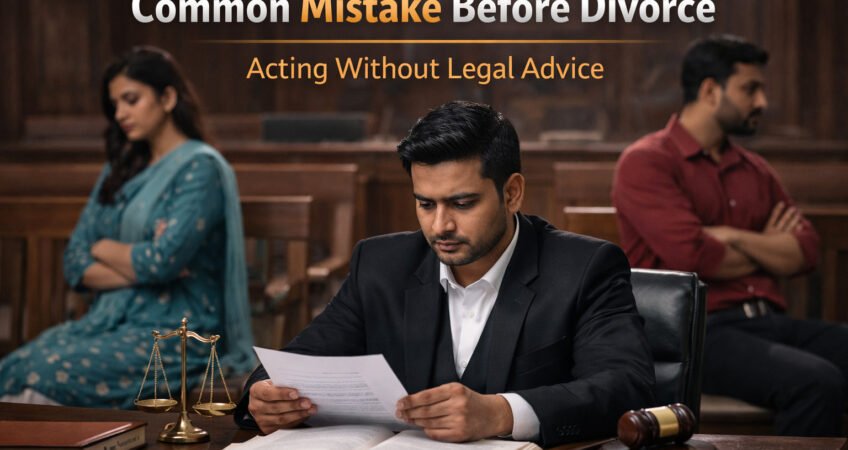
One of the most common and damaging mistakes is taking steps without first understanding the legal framework. People often rely on advice from friends, family, or online sources without verifying whether it applies to their specific situation. As a result, they may send legal notices, leave the matrimonial home, or file complaints without knowing how these actions will affect their case later.
The law in India is structured and evidence-based. Every step taken before filing for divorce can later be examined in court. When decisions are made without proper legal awareness, they can unintentionally weaken a person’s position.
Letting Emotions Control Decisions
Divorce is emotionally charged, and feelings of anger, betrayal, or fear are natural. However, allowing these emotions to dictate legal decisions is where things begin to go wrong. Many individuals take aggressive steps to “win” or to retaliate, without considering the long-term consequences.
Courts do not decide cases based on who is more hurt or emotional. They focus on facts, consistency, and legal merit. Emotional reactions often lead to inconsistent statements, exaggerated claims, or unnecessary legal battles, all of which can harm credibility.
Ignoring the Importance of Evidence
Another major mistake is assuming that personal experiences and verbal statements will be enough to support a case. In reality, courts require proof. Whether it is cruelty, financial support, or child-related issues, everything must be backed by evidence.
People often fail to preserve messages, financial records, or other documentation that could support their claims. By the time they realize the importance of evidence, it may already be too late. This lack of preparation can turn even a genuine case into a weak one.
Delaying Legal Consultation
Many individuals wait too long before consulting a lawyer. Some hope the situation will resolve on its own, while others avoid legal advice due to fear or cost concerns. Unfortunately, this delay can result in missed opportunities and irreversible mistakes.
Early legal consultation helps in understanding rights, planning the next steps, and avoiding actions that could negatively impact the case. It provides clarity at a time when confusion is at its peak.
Taking Extreme or Unplanned Legal Actions
In some cases, people take extreme steps such as filing multiple cases at once or making serious allegations without proper backing. While legal remedies are available to protect individuals, using them without a clear strategy can backfire.
Courts are increasingly cautious about misuse or exaggeration. If a case appears inconsistent or unsupported, it can affect not only that particular claim but the overall credibility of the person presenting it.
Not Considering Long-Term Consequences
Divorce is not just about ending a marriage; it involves decisions that can have lasting effects. Issues like child custody, maintenance, property division, and future financial security must be carefully considered.
Many people focus only on immediate relief without thinking about how their decisions today will affect them years later. A lack of long-term planning can lead to regret and further legal complications.
Overlooking the Possibility of Settlement
Another common mistake is assuming that every divorce must be a prolonged legal battle. While some cases do require litigation, many disputes can be resolved through mutual agreement or mediation.
Ignoring the possibility of settlement can result in unnecessary stress, time, and expense. A balanced approach that combines legal action with openness to resolution often leads to better outcomes.
Conclusion
The biggest mistake people make before divorce is acting without a clear understanding of the legal and practical implications of their decisions. Divorce is not just an emotional process; it is a legal one that requires careful planning, consistency, and strategic thinking.
Taking the time to understand your situation, seeking proper legal advice, and approaching the matter with a calm and practical mindset can make a significant difference. In many cases, one informed decision at the right time can prevent years of unnecessary litigation and stress.
FAQs
Q1. What is the first step before filing for divorce?
The first step should be to consult a qualified lawyer and understand your legal position before taking any action.
Q2. Can emotional decisions affect a divorce case?
Yes, emotional decisions often lead to mistakes such as inconsistent statements or unnecessary legal actions, which can weaken a case.
Q3. Is evidence necessary in divorce cases?
Yes, courts rely on evidence to support claims. Proper documentation is essential.
Q4. Should I rush into filing a case?
No, rushing without proper planning can create complications. It is important to proceed strategically.
Q5. Is settlement better than litigation?
In many cases, settlement can save time, money, and stress, provided it is fair and suitable for both parties.
Written by Adv. Karan Dua, practising in Delhi, focuses on matrimonial and family law matters.